
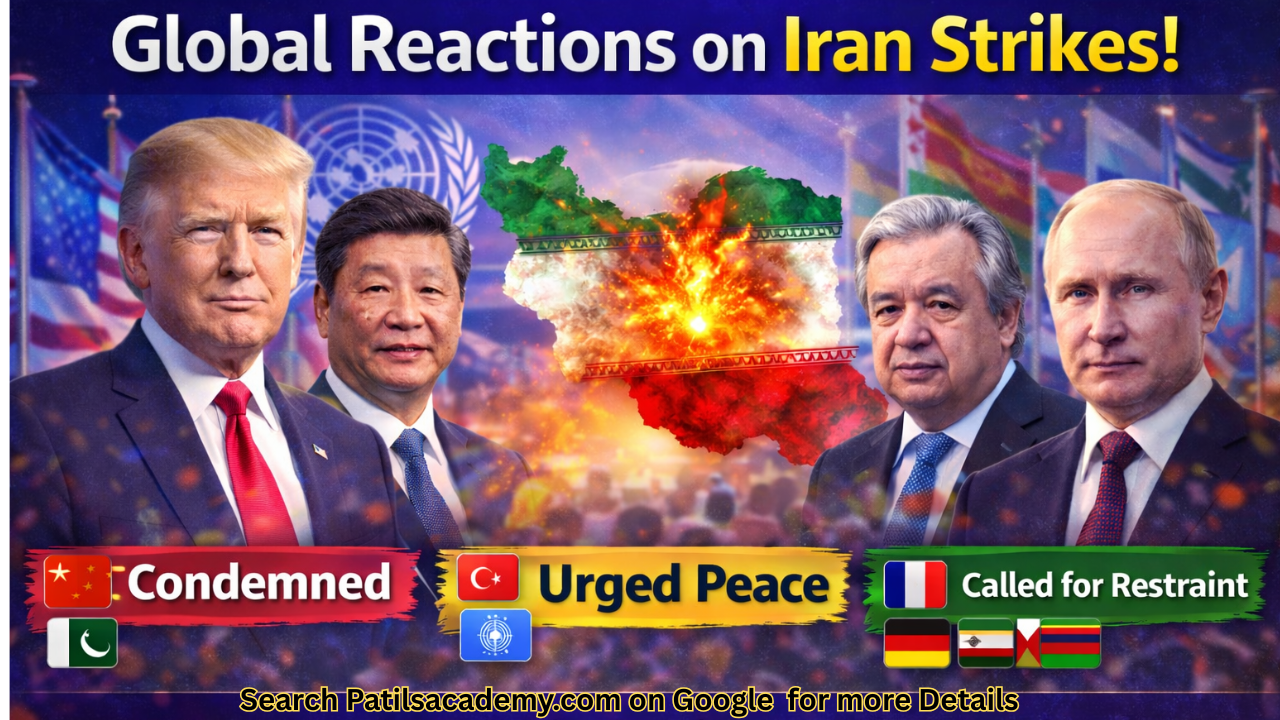
The recent joint strikes by the United States and Israel on Iran have sparked widespread reactions around the world, triggering strong diplomatic responses and urgent calls for peace. Nations and international organisations have responded in different ways — from support to condemnation — as the conflict continues to reshape regional and global dynamics.
🌍 United Nations and Western Governments
The United Nations Secretary-General condemned the military escalation, warning that it threatens international peace and urged all parties to stop fighting and return to negotiations. Western powers like France, Germany and the United Kingdom also called for restraint and emphasised the importance of protecting civilian lives. Several European leaders stressed that diplomacy, not war, must be the path forward to de-escalate tensions.
🧑🤝🧑 Global South and Major Powers
Some major countries, especially from the Global South, strongly criticised the strikes. Nations including China, Pakistan, South Africa, Brazil and Turkey labelled the military action as illegal or a violation of international law, while urging negotiations instead of violence. Russia also condemned the attacks as reckless and warned of humanitarian and regional instability if the conflict continues.
🕌 Middle East Responses
Leaders across the Middle East expressed deep concern over the rising violence. Some Gulf states condemned Iran’s retaliatory attacks on neighbouring territories and stressed the need to protect their own sovereignty and security. Others called for calm and warned that the conflict could spiral into a wider regional war. Countries like Oman urged the United States not to get drawn deeper into the conflict, highlighting fears of broader instability.
🛑 Calls for De-escalation and Peace
Many world leaders, including those from neutral or non-aligned countries, appealed for an immediate halt to violence and a diplomatic solution. The common message from these nations is that armed conflict will only deepen humanitarian suffering and have long-lasting consequences for global security.
📌 Why It Matters Globally
The strikes and reactions have major implications beyond the Middle East:
• Global oil markets are under pressure due to potential disruptions in shipping routes.
• Diplomatic alignments are shifting as countries choose sides or push for peace.
• International law debates have intensified as governments criticise or defend the military action.
• Global security institutions like the UN are being tested in preventing large-scale regional escalation.
🛡️ What Comes Next
As global leaders express mixed views on the strikes — from strong criticism to cautious support — the world watches closely for developments in diplomatic efforts, ceasefire negotiations and possible new rounds of conflict. The emphasis remains on dialogue, restraint and avoiding civilian harm.